By Lloyd Carpenter | Waspman’s Lead Exterminator & Urban Pest Manager
Noticing more wasps around your house, garden or roofline? You could have an active wasp nest nearby, even if you can’t see it.
Wasps are common across New Zealand, particularly during the warmer months when colonies become more active. While seeing an occasional foraging wasp doesn’t necessarily indicate a problem, repeated activity around the same location can be a sign of an established nest.
I’m Lloyd “Waspman” Carpenter, Waspman’s lead exterminator, with over 20 years of experience in pest control across Auckland. In this guide, I’ll explain the seven most common signs of a wasp nest, where different species build their colonies and when to seek professional help.
Quick summary: 7 signs of a wasp nest
- Increased wasp activity: More wasps than usual around your house or garden.
- Wasps entering holes in the ground: A possible underground wasp nest.
- Activity around rooflines: Wasps disappearing into roof cavities, eaves or wall gaps.
- Visible paper wasp nests: Exposed, honeycomb-like nests on buildings or vegetation.
- Aggressive wasps: Defensive behaviour when people approach a particular area.
- Consistent flight paths: Wasps repeatedly flying towards the same location.
- Buzzing inside walls or ceilings: Possible activity within a concealed nest.
Suspect a wasp nest on your property? Waspman provides professional wasp control and wasp nest removal across Auckland.
Increased Wasp Activity Around Your Home
One of the earliest signs of a wasp problem is noticing more wasps around your property.

Worker wasps leave their nests to search for food, often gathering around fruit trees, rubbish bins, outdoor meals and gardens where insects are abundant.
As a colony grows, more wasps begin foraging, increasing the number you may encounter.
However, nuisance wasps gathering around food don’t necessarily mean there’s a nest nearby. Wasps can travel considerable distances from their colony.
What to look for: Wasps repeatedly returning to a particular part of your property, especially where there isn’t an obvious food source.
Learn more about what wasps eat and why they’re attracted to your property. You can also read what attracts wasps to a home.
Wasps Entering and Exiting a Hole in the Ground
German wasps and common wasps frequently build nests underground, often using existing cavities beneath lawns, garden beds and soil banks.
Common nesting locations include:
- Lawns and garden beds.
- Retaining walls and soil banks.
- Tree roots and abandoned animal burrows.
- Fence lines and bush margins.
An underground wasp nest may have only a small visible entrance, despite containing thousands of worker wasps.
What to look for: Wasps repeatedly entering and exiting the same hole in the ground.
These nests can be dangerous when disturbed by gardening, mowing lawns or walking nearby.
My advice: Never dig into a suspected wasp nest or block its entrance. Disturbing an active colony can provoke aggressive behaviour and multiple wasp stings.
Wasps Entering Rooflines, Eaves or Wall Cavities
German and common wasps can establish nests in sheltered building spaces, including roof cavities, wall voids and ceiling cavities.
Signs of a concealed nest include wasps repeatedly entering:
- Gaps beneath roof tiles or fascia boards.
- Openings around soffits and eaves.
- Cracks in exterior cladding.
- Ventilation openings or structural gaps.

Large colonies can occupy substantial space inside buildings, creating safety concerns if wasps enter living areas.

What to look for: Consistent wasp activity around the same opening, sometimes accompanied by buzzing inside a wall or ceiling.
Avoid sealing the entrance, as trapped wasps may seek another exit into the house.
Wasps entering your roof or walls?
Waspman provides specialist wasp treatment for nests in challenging locations.
A Visible Paper Wasp Nest
Unlike German and common wasps, which build enclosed nests, paper wasps construct exposed nests with visible honeycomb-like cells.

The Asian paper wasp (Polistes chinensis) is established across Auckland and commonly builds nests:
- Beneath house eaves.
- On fences and gates.
- Under decks and verandas.
- Around garden sheds.
- Attached to shrubs and tree branches.
Paper wasp colonies are generally smaller than German or common wasp colonies, but they can still sting when threatened.
Properties may also have multiple paper wasp nests.
For help identifying different species, see the Department of Conservation’s guide to wasps in New Zealand.
Aggressive Wasps Around a Particular Area
Wasps are social insects that defend their nests when threatened.
If wasps become noticeably aggressive around a specific garden path, entrance, deck or outdoor structure, there could be a colony nearby.
German and common wasps can sting repeatedly, making an active nest particularly concerning around children, pets and frequently used outdoor areas.
What to look for: Wasps flying defensively towards people or animals approaching a particular location.
Keep a safe distance rather than attempting to investigate.
Important: Wasp stings can cause severe allergic reactions. If someone experiences difficulty breathing, throat or tongue swelling, or collapse following a sting, call 111 immediately.
Wasps Following the Same Flight Path
Worker wasps regularly travel between their nest and food sources.
A consistent flight path towards a tree, roofline, retaining wall or ground opening may help indicate where the colony is located.
However, wasps travelling towards a food location aren’t necessarily nesting there.
What to look for: Wasps repeatedly disappearing into the same opening and others emerging from it.
Observe from a safe distance. Don’t follow wasps into dense vegetation, roof spaces or suspected nest entrances.
Persistent Buzzing Inside Walls or Ceilings
Wasps may establish concealed nests inside a house without the homeowner noticing the colony.

Possible signs include:
- Repeated buzzing or a ticking type noise from a wall or ceiling.
- Wasps making their way indoors without an obvious entry point.
- Increasing activity around an exterior gap.
Buzzing alone doesn’t confirm a wasp nest, but combined with repeated wasp activity outside, it may indicate a concealed colony.
Avoid opening walls, ceilings or roof cavities to investigate.
What Types of Wasps Build Nests in Auckland?
Three introduced wasp species are particularly relevant to Auckland property owners.
| Wasp species | Typical nest locations | Key characteristics |
|---|---|---|
| German wasp (Vespula germanica) | Ground, roof spaces, wall cavities | Large enclosed nests; colonies can contain thousands |
| Common wasp (Vespula vulgaris) | Ground, tree hollows, structural cavities | Large social colonies; defensive around nests |
| Asian paper wasp (Polistes chinensis) | Eaves, fences, shrubs, outdoor structures | Smaller exposed nests with visible cells |
German and common wasps belong to the genus Vespula, commonly called yellow jackets overseas.
These species are a major pest problem in New Zealand. The Department of Conservation reports that introduced wasps reach exceptionally high densities in some native beech forests, where they consume honeydew produced by native scale insects and prey on native insects.
This competition affects native birds, lizards and other wildlife within the natural food chain.
For further information, read DOC’s guide to introduced wasps and their environmental impacts.
Can You Remove a Wasp Nest Yourself?
Attempting DIY wasp nest removal can be dangerous, particularly when the colony is underground or concealed inside a building.

A small entrance doesn’t necessarily mean a small nest. Disturbing a large colony can trigger multiple wasps to attack.
Common risks include:
- Multiple painful wasp stings.
- Incomplete treatment of an active nest.
- Unsafe pesticide application.
- Wasps entering living spaces after entrances are blocked.
Household wasp sprays or residual insecticide treatments aren’t necessarily suitable for every nest, particularly those concealed in roof cavities or underground.
Professional wasp extermination involves selecting an appropriate treatment based on the species, nest location and surrounding environment.
Read more: The Risks of DIY Wasp Nest Removal in Auckland. See also how to get rid of a wasp nest in NZ.
Found an active wasp nest?
Avoid disturbing it. Contact Waspman for specialist wasp control services across Auckland.
Professional Wasp Nest Removal Across Auckland
At Waspman, we specialise in treating German wasps, common wasps and paper wasps around residential and commercial properties.
With more than 20 years of experience, we’ve tackled everything from small exposed nests to enormous colonies hidden underground or inside buildings.
Our professional wasp control service involves:
- Identifying the nest: Confirming the species and location.
- Assessing access and risks: Considering the nest size, surroundings and treatment requirements.
- Targeted wasp treatment: Using appropriate professional equipment and methods.
- Post-treatment advice: Explaining what to expect and whether further action is needed.
To effectively treat a colony, we need to know where the nest is located. Wasps foraging around your garden may be coming from elsewhere.
Auckland-Wide Wasp Control Services
Waspman operates across its Auckland service area, including:
West Auckland: New Lynn, Henderson, Glen Eden, Titirangi, Te Atatū, Massey and surrounding suburbs.
North Shore: Albany, Glenfield, Birkenhead, Takapuna, Northcote and surrounding areas.
Central Auckland: Mount Eden, Mount Albert, Grey Lynn, Point Chevalier, Epsom and surrounding suburbs.
East Auckland: Howick, Pakuranga, Botany and surrounding areas, subject to service availability.
South Auckland: Māngere, Papatoetoe, Manukau, Manurewa and surrounding areas within our service coverage.
Whether you’re dealing with a wasp nest in your garden, roof space or another part of your property, contact Waspman to discuss your situation. If your suburb isn’t listed, get in touch anyway.
Why Choose Waspman?
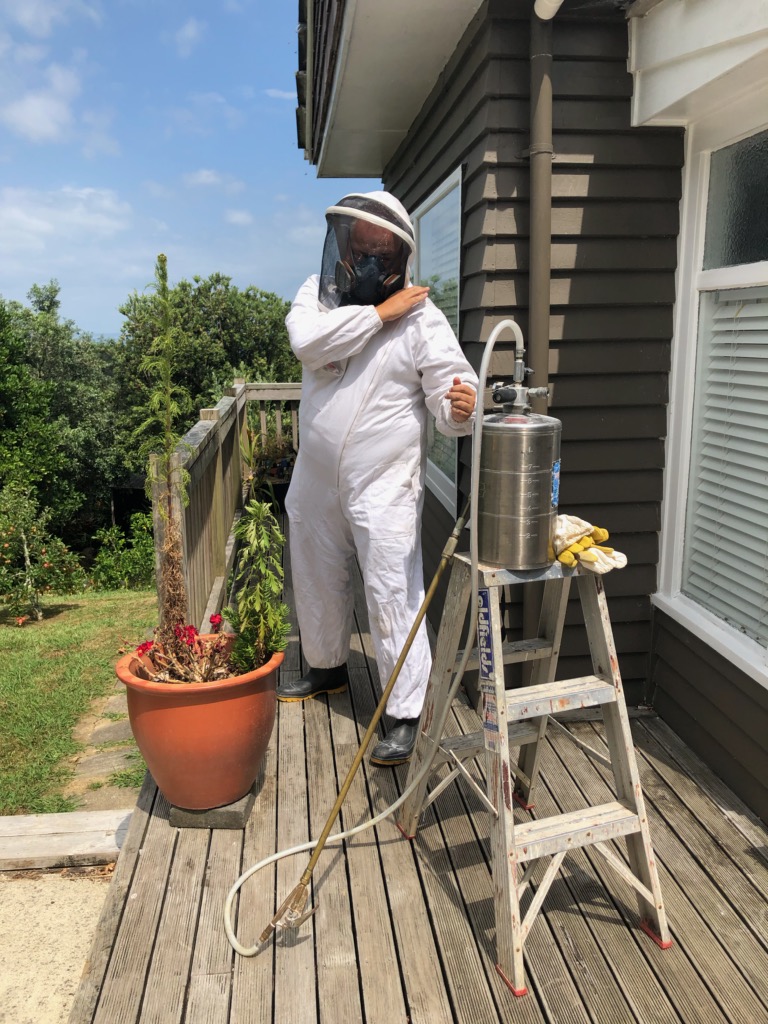
Waspman’s lead exterminator, Lloyd Carpenter, is an experienced Urban Pest Manager specialising in wasp control.
Our work has been featured in New Zealand media, including coverage of a massive South Auckland wasp nest containing more than 200,000 wasps.
Read about Waspman’s South Auckland wasp nest extermination or meet Lloyd and the Waspman team.
Frequently Asked Questions About Wasp Nests
Look for increased wasp activity, repeated flight paths and wasps entering or exiting the same hole, roof gap or wall cavity. These are stronger indicators than simply seeing wasps around food or flowers.
Wasp activity generally increases during spring and summer, with German and common wasp colonies often reaching peak activity during late summer and autumn. Some colonies survive through New Zealand’s mild winters. Read our guide on when wasp season ends in Auckland.
Some colonies decline naturally as the seasons change, but German and common wasp colonies can sometimes survive through winter. Leaving a nest near frequently used areas can increase the risk of stings.
This depends on the species, nest location and treatment method. Activity may decline within a few hours after certain treatments, while complete control can take longer. Your technician can advise what to expect.
Costs depend on the provider, nest location and treatment requirements. Waspman provides information about its services and pricing on its Auckland Wasp Control page. For more detail, see our guide to wasp nest removal costs in Auckland.
Found a Wasp Nest? Leave It to Waspman
A small opening in the ground or repeated activity around your roofline could indicate a much larger colony hidden from view.
At Waspman, we’ve spent more than 20 years helping Auckland homeowners and businesses deal with wasp infestations.
If you’ve identified an active wasp nest, avoid disturbing it and seek professional help.
Don’t wait until someone gets stung.
Avoid a sting. Give us a ring!
About the Author

Lloyd “Waspman” Carpenter
Lead Exterminator & Urban Pest Manager
Lloyd Carpenter is Waspman’s lead exterminator, with more than 20 years of experience in Auckland’s pest control industry.
Specialising in German wasps, common wasps and paper wasps, Lloyd has extensive practical experience treating active nests in residential, commercial and rural environments.